24+
Production Systems
 Cargo Propel Systems
Software Development + Logistics Technology
Cargo Propel Systems designs, develops and supports production-ready web, mobile and cloud platforms for logistics, retail, service operations and growing enterprises.
Production Systems
Clients & Projects
Connected Workflows
Delivery Capability

Cargo Propel Systems is a Zimbabwean software development and ICT consultancy building practical systems for logistics, retail, service businesses and enterprise teams.
We design databases, dashboards, APIs, mobile apps, admin portals and cloud environments that replace manual work with dependable digital operations.
We start with real workflows, define the right architecture, ship in focused phases and remain available for support, security improvements and product growth.
Services
Customer portals, internal tools, mobile apps and dashboards built around the way your team actually works.
Transport booking, fleet coordination, tracking, dispatch and reporting systems for logistics-heavy operations.
Hosting, deployments, backups, monitoring and infrastructure patterns that keep production systems available.
We connect payment gateways, ERP tools, CRMs, SMS, email, maps and third-party APIs into one working flow.
Role-based back offices, approvals, exports, audit trails and operational reports for decision makers.
Automated workflows for quotes, orders, inventory, notifications, approvals and recurring operational tasks.
Point of sale, stock control, branch reporting and finance-ready exports for retail and service businesses.
Company-trained assistants, document search, voice input and support workflows connected to verified business knowledge.
Live Product
.jpeg)
.jpeg)
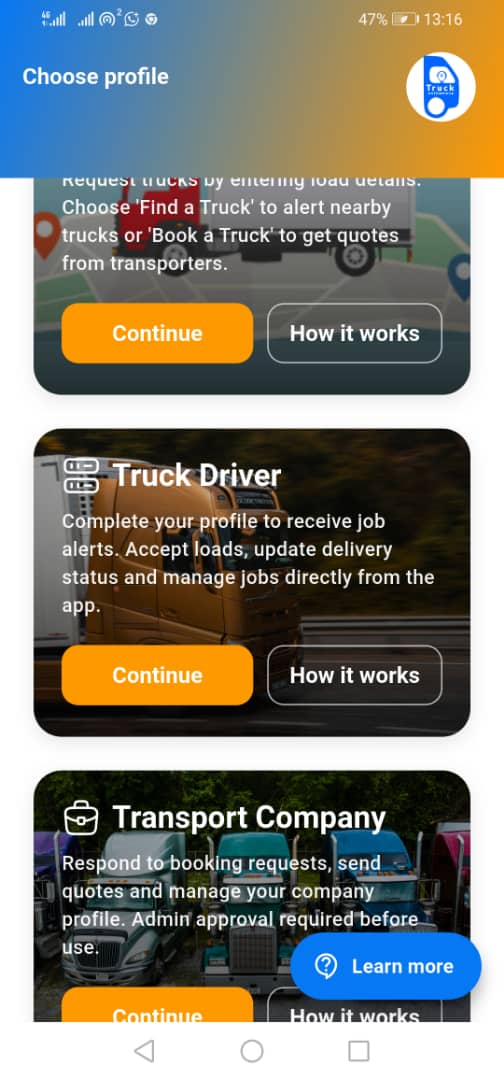
A live logistics product by Cargo Propel Systems for truck discovery, transport booking and operational coordination.
The platform shows the kind of product work we deliver: mobile-first user journeys, structured back-office management and practical logistics workflows.
View live productDelivery Process
We map users, data, workflows, risks and the business outcome the system must support.
We define the database, permissions, APIs, integrations and deployment approach before heavy build work.
We ship focused modules, test critical flows and keep stakeholders close to the product as it matures.
We deploy, monitor, train users and keep improving the product after it goes live.
Insights
How intelligent platforms are transforming logistics from manual coordination into real-time operational systems.
Why connected tools, unified data and operational visibility now shape logistics performance.
A strategic view of how automation, data and structured workflows improve logistics execution.
Thought Leadership
The logistics industry is rapidly evolving from traditional coordination methods into intelligent, data-driven ecosystems. What was once dependent on manual processes and fragmented communication is now shifting toward real-time digital platforms that connect people, vehicles and operations seamlessly.
At Cargo Propel Systems, we believe the future of logistics is not just digital - it is intelligent, adaptive and system-driven.
Modern logistics is no longer just about moving goods from one point to another. It is about optimizing decisions in real time. Businesses now require systems that can process information instantly, reduce delays and improve coordination across entire supply chains.
These capabilities are transforming logistics from a reactive function into a proactive intelligence system.
Many organizations still rely on disconnected tools for bookings, tracking and communication. This creates delays, miscommunication and inefficiencies that scale poorly as operations grow.
In modern logistics, these limitations are no longer acceptable.
Digital platforms such as Truck on the Move represent a new generation of logistics systems. They bring together availability, booking and coordination into a single structured environment.
The future of logistics belongs to systems that think, adapt and respond in real time. Organizations that embrace intelligent logistics platforms will not only improve efficiency but also redefine how operations are managed at scale.
Industry Authority
In modern logistics and enterprise operations, success is no longer determined by individual tools - but by how well those tools work together.
Integration has become the foundation of operational excellence.
Many organizations operate with separate systems for tracking, communication, inventory and reporting. While each tool may function well independently, the lack of integration creates operational friction.
These inefficiencies reduce overall performance and scalability.
Integrated systems unify operations into a single connected environment. Instead of working in isolation, every component of the business communicates seamlessly.
Integration transforms logistics from disconnected processes into a unified operational ecosystem.
Organizations that adopt integrated systems gain a significant advantage in speed of execution, accuracy of operations, customer responsiveness and scalability of systems.
In competitive logistics environments, these advantages directly translate into better service delivery and stronger market positioning.
The next phase of logistics evolution is not just automation - it is full system connectivity. Businesses that invest in integrated platforms today are building the foundation for long-term operational resilience.
Strategy Thinking
Across industries, logistics operations are undergoing a major transformation - from manual processes to automated, intelligent systems.
This shift is redefining how organizations plan, execute and optimize their operations.
Manual logistics processes rely heavily on human coordination, paperwork and reactive decision-making.
As demand increases, manual systems become unsustainable.
Modern logistics platforms introduce automation, structured workflows and real-time data processing.
The result is faster, more accurate and more reliable logistics execution.
Transitioning to intelligent systems is not just a technical upgrade - it is a strategic shift in how organizations operate.
This transformation improves both efficiency and long-term scalability.
Organizations that adopt intelligent logistics systems experience reduced operational delays, improved coordination across teams, better resource utilization and higher customer satisfaction.
This creates a stronger and more competitive operational structure.
The future of logistics lies in intelligent systems that reduce complexity and enhance decision-making. Businesses that transition early will gain a structural advantage in efficiency, scalability and performance.
Contact
Talk to us about a website, mobile app, admin portal, POS, logistics platform, chatbot or complete business system.
Email developers@cargopropelsystems.com
Call +263714202137
WhatsApp +263715326342
Location 251 SAMORA MACHEL THROGMORTON BUILDING 7TH FLOOR, RIGHT WING HARARE
Ready to Build?
From discovery to deployment, we help teams launch systems they can trust in daily work.
Book a Consultation